

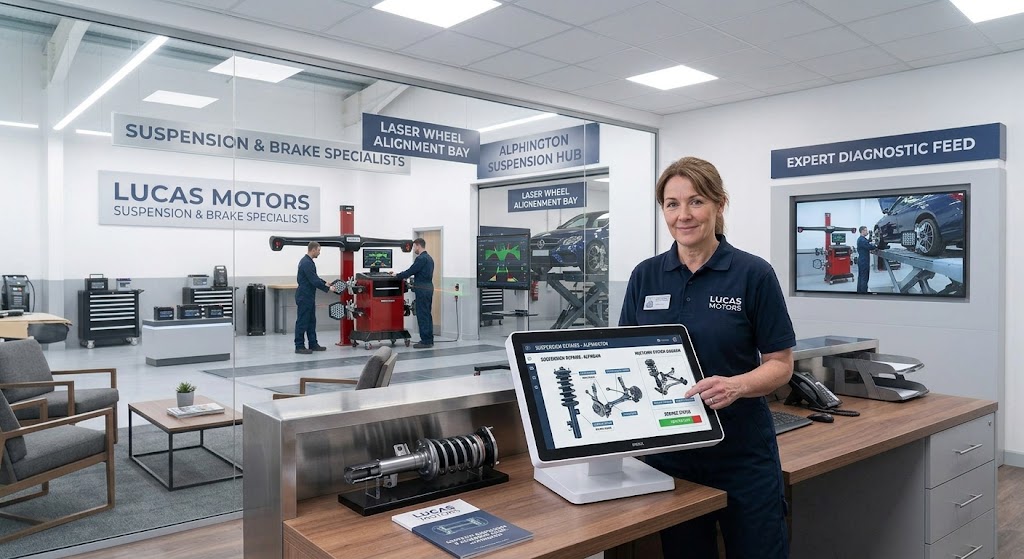
At a glance: Suspension affects comfort, tyre contact and vehicle control. Bouncing, knocking or uneven tyre wear should be assessed together so the cause is identified before repairs begin.
A suspension problem may first appear as an uncomfortable ride, but the system does much more than absorb bumps. It helps control body and wheel movement so the vehicle can respond predictably when steering and braking.
If your car has started knocking over bumps, bouncing more than usual or wearing its tyres unevenly, Luca Motors can assess the concern at our Alphington workshop. Describing what has changed helps focus the inspection.
What does the suspension system do?
Springs support the vehicle and allow the wheels to move over uneven surfaces. Shock absorbers, also called dampers, control that movement. Arms, joints, bushes and other components guide the wheels while allowing the required movement.
These parts work alongside the tyres and steering. Wear in one area can change how the whole vehicle feels, which is why a suspension concern is best assessed as a system rather than as a single noise.
Signs your suspension needs attention
Excessive bouncing or body movement
A vehicle that continues to bounce after a bump, feels unsettled on uneven roads or dips noticeably during braking may need inspection. Dampers are one possible cause, but loading, tyres and other components also influence the behaviour.
Knocks and clunks over bumps
Worn bushes, joints, stabiliser links or mounts can make noise as the suspension moves. A loose item elsewhere in the vehicle can sound similar. Tell the workshop whether the noise occurs over small bumps, during turns or when entering a driveway.
Uneven tyre wear or pulling
Tyre pressure, wheel alignment, steering and suspension condition can all contribute to uneven wear or pulling. Replacing a tyre or adjusting alignment without checking the underlying cause may leave the original issue unresolved.
Changed steering response or ride height
Loose or delayed steering response, a vehicle sitting lower at one corner or a new vibration deserves assessment. If the car feels unstable or difficult to control, stop safely and seek advice before continuing.
Common suspension components
- Shock absorbers: control suspension movement and may lose effectiveness or develop leaks.
- Struts: combine damping with a structural role in some suspension designs; their mounts can also wear.
- Springs: support vehicle weight and can be damaged or deteriorate.
- Control arms: locate the wheel assembly while allowing controlled movement.
- Ball joints: allow movement between connected suspension or steering parts.
- Bushes: cushion connections and control movement between components.
- Stabiliser links and mounts: contribute to controlling body roll and can become noisy when worn.
The exact layout varies by vehicle. Some models also have electronically controlled or air suspension, requiring different checks and repair procedures.
How suspension problems are assessed
An assessment starts with your description and, where appropriate, a road test to understand the symptom. Inspection then looks for relevant wear, leaks, damage, abnormal movement and tyre condition.
Electronic testing may be relevant on vehicles with controlled suspension systems, but a scan cannot replace a physical inspection. A component should be recommended for replacement because the findings support it, not simply because another vehicle with a similar noise needed the same part.
Depending on the result, work may involve replacing dampers, struts, bushes, joints or other components. The repair approach should suit the vehicle and take related wear into account. Ask the workshop to explain what was found and how the proposed work addresses the symptom.
Suspension repairs and wheel alignment
Wheel alignment concerns the angles at which the wheels sit and travel. Worn or damaged suspension can prevent those angles from remaining correct. Relevant repairs may also alter them.
For that reason, an alignment check may be appropriate after suspension work. The sequence matters: worn components generally need assessment and repair before an alignment can be expected to hold. Alignment alone does not fix a loose joint or ineffective damper.
Why early inspection can help
Investigating a developing problem can limit additional tyre wear and help you plan work before handling becomes worse. The benefit depends on the fault; there is no universal repair saving or component lifespan.
Keeping a note of when a symptom began is useful. Mention any recent pothole impact, wheel change or repair, since this can help the technician understand the circumstances.
Looking after your suspension
Approach speed humps at an appropriate speed, avoid potholes where it is safe to do so and keep tyre pressures suited to the vehicle and load. Stay within the vehicle’s loading limits and have recurring noises investigated.
Routine servicing provides opportunities to check visible suspension condition, but new handling concerns should be assessed when they arise. If you are unsure what a symptom means, our guide to getting automotive advice explains what information to provide.
Suspension repair FAQs
How long should shock absorbers last?
There is no reliable replacement distance for every vehicle. Design, load, road conditions and use affect wear. Condition and performance should guide the recommendation.
Is it safe to drive with a suspension noise?
A noise alone does not reveal the severity. Arrange advice, and do not continue if steering or stability is compromised.
Can suspension repairs help tyre wear?
They can when worn suspension contributes to the problem. Tyre condition, pressure and alignment may also need attention.
Book suspension repairs in Alphington
Visit our suspension repairs service page, or contact Luca Motors at 164 Grange Rd, Alphington VIC 3078. Call 03 9499 6203 or enquire online with your vehicle details and symptoms.