

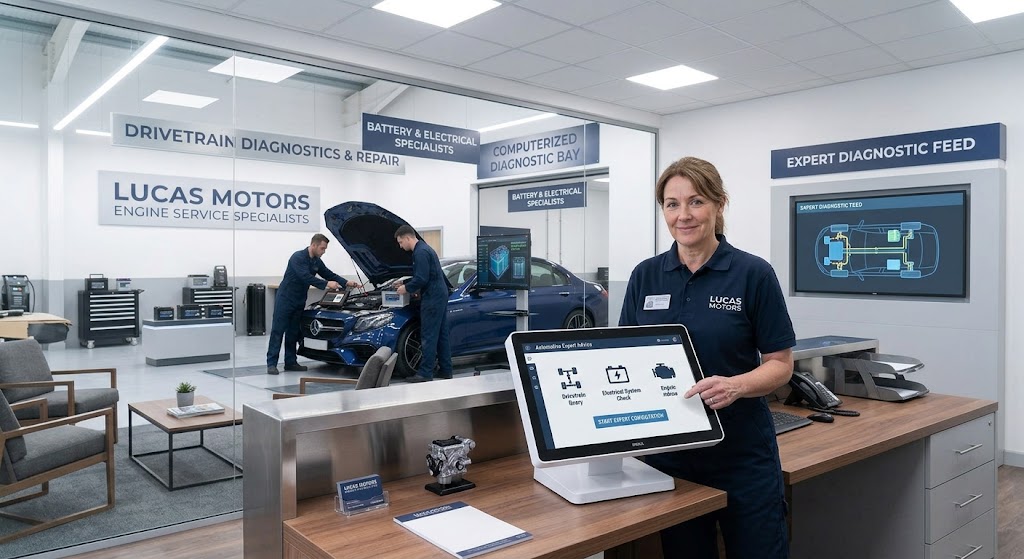
At a glance: Good automotive advice starts with clear symptoms and vehicle details. Tell the workshop what changed, when it happens and what you need help deciding.
A new warning light, an unfamiliar noise or an upcoming service can raise questions that a general online search cannot settle. The same symptom can have different causes, and maintenance requirements vary between vehicles.
Speaking with a workshop helps you decide whether to arrange routine servicing, a focused inspection or more urgent assistance. Luca Motors in Alphington can discuss your concern and help identify the appropriate next step.
When should you contact an automotive workshop?
A warning light appears
Note the symbol, colour and wording, and whether it stays on or flashes. Check the owner’s manual for the vehicle-specific response. Some warnings need prompt investigation even when the car feels normal.
If the engine overheats, an oil-pressure warning appears or the car becomes unsafe to control, stop safely and seek assistance. Do not keep driving simply to reach a booked appointment.
Starting or engine performance changes
Slow cranking, repeated clicking, rough idling and poor acceleration may involve different systems. A workshop will need to know whether the symptom happens cold, warm, after the car has been parked or under load.
A sustained increase in fuel consumption is also worth discussing if it cannot be explained by changed traffic, trip length or load. The useful information is how much fuel the vehicle uses, rather than a change in the price paid at the pump.
Braking, steering or suspension feels different
Describe new vibration, pulling, grinding or a changed brake-pedal feel. Mention whether a noise occurs during braking, turning or driving over bumps. These details help distinguish between systems with overlapping symptoms.
Significantly reduced braking or unstable steering needs immediate attention. Stop safely and arrange advice rather than continuing to test the symptom on the road.
You need to plan maintenance
You do not need a fault to ask for help. A recently purchased vehicle, an incomplete service history or a reminder on the dashboard can all be reasons to discuss the schedule and establish what is due.
What professional advice can tell you
An initial conversation can help identify the type of appointment required and the information the workshop needs. A firm diagnosis usually requires the vehicle to be inspected and tested.
Electronic fault information is useful when relevant, but it must be interpreted alongside the symptoms and physical condition. A fault code does not automatically prove that a component needs replacing, and a lack of codes does not rule out a mechanical problem.
After assessment, useful advice explains the finding, its effect on the vehicle and the proposed work. It should also identify uncertainty: an intermittent concern may need further observation or testing before the cause is confirmed.
Services you can ask Luca Motors about
Tell the team what you need so the scope can be confirmed for your vehicle. Common enquiries include:
- Routine maintenance and logbook servicing.
- Engine diagnostics and mechanical repairs.
- Brake concerns and replacement of worn components.
- Battery testing and starting problems.
- Steering and suspension concerns.
- Cooling-system leaks, overheating and servicing.
- Clutch, transmission and gear-change problems.
- Air-conditioning performance and related service enquiries.
The make, model and system involved determine the procedures and equipment needed. Confirm the available assessment when booking rather than assuming every job has the same requirements.
How to prepare for your appointment
Have the make, model, year, registration and current kilometres ready. Bring the service record and relevant invoices, particularly if the concern began after recent repairs or a battery replacement.
A short description is often more useful than a guessed diagnosis. “The engine cranks slowly on the first start of the day” provides clearer evidence than “it needs a starter motor”.
- When did you first notice the problem?
- Does it happen every time or only occasionally?
- Is the engine cold or warm?
- What speed, gear or driving action is involved?
- Are there warning messages, leaks or unusual smells?
- Has anything changed recently, including repairs or how the car is used?
If a warning appears intermittently, a photograph taken while safely parked may help. Do not use a phone while driving or repeatedly operate the vehicle to recreate an unsafe symptom.
Questions worth asking after an inspection
Ask what the tests showed, which work needs prompt attention and what can be planned for later. Confirm the proposed parts, scope and estimated timing, along with whether further testing might be needed.
If several items are identified, a clear explanation of their condition helps you make an informed decision. Regular maintenance can reduce some avoidable problems, but it is not a guarantee against every future repair.
Automotive advice FAQs
Can a problem be diagnosed over the phone?
A conversation can help assess urgency and plan an appointment. Similar symptoms have different causes, so inspection is usually needed before a repair can be recommended confidently.
How often should my vehicle be inspected?
Follow its maintenance schedule and arrange assessment when a new concern appears. The correct schedule depends on the vehicle and its use.
Should I clear fault codes before visiting?
Leave stored information available where possible. Clearing it can remove details that help the workshop investigate the concern.
Contact Luca Motors
Luca Motors is at 164 Grange Rd, Alphington VIC 3078. Call 03 9499 6203 or send an online enquiry with your vehicle details and a short description of what you have noticed.