

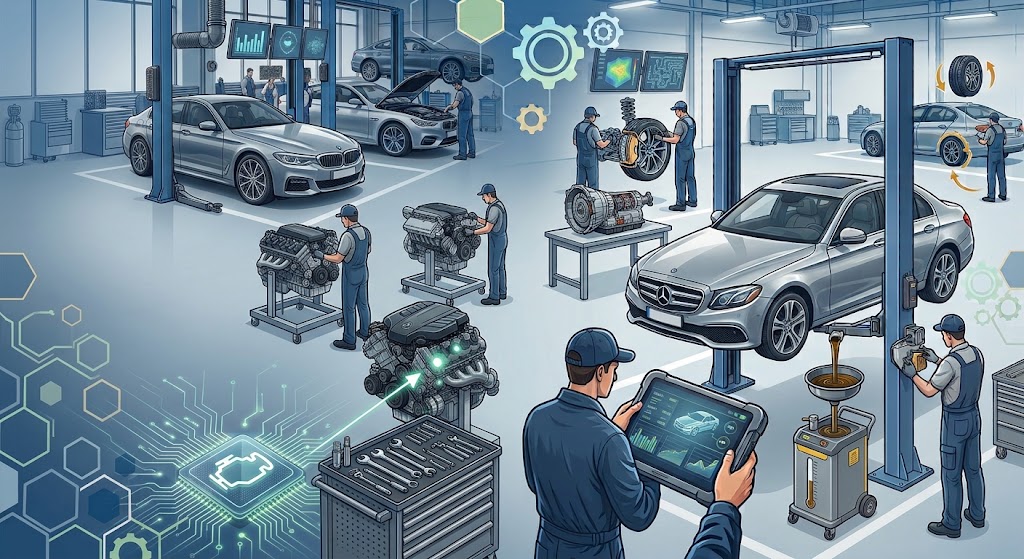
At a glance: A warning light is a reason to investigate. Engine diagnostics combines electronic information with practical testing to find the cause before repairs are recommended.
A check engine light, rough idle or sudden loss of power can leave you unsure what to do next. Several different faults can produce similar symptoms, so replacing the first part named by a scan tool is rarely a sensible starting point.
At Luca Motors in Alphington, engine diagnostics helps connect what you notice behind the wheel with the condition of the vehicle. The aim is to establish what is happening, identify the tests needed and explain the repair options clearly.
What are engine diagnostics?
Modern vehicles use sensors and electronic control units to monitor engine operation. When a monitored value falls outside the expected range, a control unit may store a diagnostic trouble code and illuminate a warning light.
A scan tool reads that information through the vehicle’s diagnostic connector. Depending on the vehicle, it can also display live operating data and the conditions recorded when a fault occurred.
This information provides clues. A code referring to an oxygen sensor, for example, does not by itself establish that the sensor needs replacing. Wiring, air leaks, fuel delivery and other faults may influence the same reading. The evidence needs to be checked against the vehicle’s symptoms.
Signs your car needs an engine assessment
Warning lights and reduced performance
Arrange advice if the engine warning light appears, acceleration changes or the vehicle enters a reduced-power mode. A light that stays on deserves attention even if the car appears to drive normally.
If the warning flashes, the engine runs very roughly or power drops suddenly, stop somewhere safe and seek advice before continuing. An oil-pressure or overheating warning also needs an immediate safe response; consult the owner’s manual for the specific warning.
Starting, idling and fuel consumption changes
Longer cranking, repeated starting difficulties or a shaking idle can involve the battery, ignition, fuel supply or mechanical condition. Tell the workshop whether the symptoms occur with a cold engine, after a short stop or only once the engine is warm.
A sustained increase in fuel use is also useful information. Consider whether traffic, trip length or loads have changed, then mention any associated warning lights, hesitation or unusual smells.
New noises, leaks or exhaust smoke
Knocking, rattling and persistent exhaust smoke need investigation. Note when they occur without repeatedly running an engine that appears distressed. A scan may help, but physical inspection is essential because many mechanical faults do not generate an electronic code.
What happens during a diagnostic appointment?
- Discuss the symptoms. Your description, recent repairs and service history help determine where testing should begin.
- Check the vehicle. Initial checks may include fluid levels, visible leaks, wiring connections and battery condition, depending on the concern.
- Read relevant system information. Stored codes and available live data are reviewed in context, rather than treated as a parts list.
- Test the suspected cause. Electrical measurements, component checks or mechanical testing may be required to distinguish between possible faults.
- Explain the findings. The next step may be a repair recommendation or further investigation if the evidence is incomplete.
- Check the result. After agreed repairs, appropriate checks help establish whether the original symptom has been addressed.
Common areas an investigation may cover
Engine fault finding can involve ignition coils and spark plugs, airflow and oxygen-sensor readings, fuel delivery, charging voltage, cooling-system operation and emissions-related components. The relevant systems depend on the engine and the symptoms.
For example, a misfire can have electrical, fuel-related or mechanical causes. A low-voltage issue can also affect several electronic systems at once. Looking at the wider pattern helps avoid treating each stored code as a separate failed component.
Some vehicles also store useful transmission information. If the symptoms relate to gear changes or power delivery, the investigation may extend beyond the engine itself. Read more about related mechanical repairs.
Why early attention can help
Understanding a developing fault can help you make a better repair decision and may limit further damage. Correcting an actual engine-management problem can improve running quality or fuel consumption, but the result depends on the fault. A diagnostic scan alone does not improve performance.
Keep routine servicing up to date, use the fuel and fluids specified for your vehicle, and follow the handbook when checking levels. Let the workshop know about changes between services instead of waiting for a scheduled appointment.
Engine diagnostics FAQs
Can a scan find every engine problem?
No. Mechanical wear, leaks and intermittent faults may require separate testing, even when no code is stored.
How long does diagnosis take?
A straightforward fault and an intermittent problem can take very different amounts of time. Ask about the initial assessment and how further testing will be discussed.
Does clearing the warning light fix the fault?
No. Clearing codes removes information; it does not repair the underlying cause. Avoid clearing them before an appointment, as the stored details may help the investigation.
Book engine diagnostics in Alphington
Contact Luca Motors at 164 Grange Rd, Alphington VIC 3078, on 03 9499 6203. You can also read about our engine diagnostics and fault-finding service or send an enquiry. Include your vehicle details and a description of the symptoms.