
At a glance: New noises, leaks and changes in braking or handling deserve attention. A focused inspection helps establish what needs repairing and which concerns are most urgent.
Mechanical problems often begin as small changes: a new noise over a bump, a longer crank before starting or a vibration that was not there last week. Understanding the cause early gives you a clearer choice about the next step.
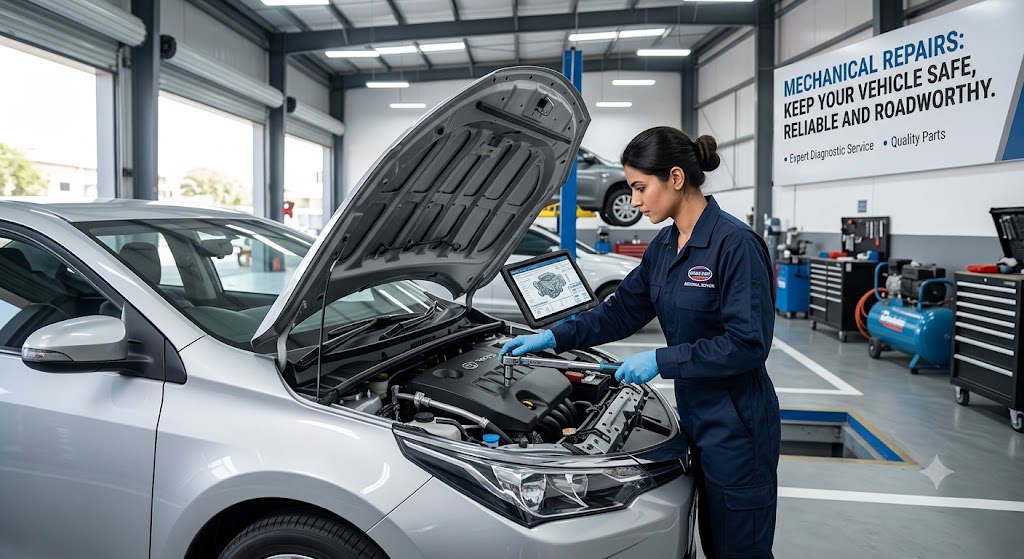
Luca Motors provides mechanical repairs in Alphington for a range of everyday and European vehicles. Whether the concern involves the engine, brakes, cooling system or drivetrain, the starting point is a clear description of the symptoms and an inspection suited to the vehicle.
Why mechanical repairs matter
A vehicle’s systems work together. Worn suspension can affect tyre wear, a coolant leak can lead to overheating, and an engine-running problem can affect how the car responds in traffic. Leaving a fault unassessed can make it harder to plan repairs and may allow further damage.
Prompt attention supports reliable operation, but not every noise requires the same response or repair. The useful question is what the inspection shows, how it affects the vehicle and whether it is safe to keep driving while the next step is arranged.
Common areas of mechanical repair
Engine and starting problems
Rough idling, difficult starting, unusual smoke, reduced power and engine warning lights can have several causes. Diagnosis may involve electronic information alongside checks of ignition, fuel delivery, charging voltage and mechanical condition.
Fault codes guide investigation. They do not automatically identify a failed part, and an engine that stores no code may still have a mechanical problem.
Brake repairs
Grinding, a changed pedal feel, vibration during braking or a vehicle pulling to one side should be investigated. An assessment may include pads, discs, hoses, fluid condition and other components relevant to the symptom.
Do not continue driving if braking is significantly reduced or the pedal response becomes unsafe. Stop safely and arrange assistance. A regular service check is useful, but a braking concern may need a more detailed inspection.
Suspension and steering
Knocking over bumps, excessive bouncing, loose steering and uneven tyre wear can indicate a problem with suspension, steering, tyres or wheel alignment. Because the symptoms overlap, the worn or damaged component needs to be identified before parts are selected.
Depending on the findings, repairs may involve bushes, joints, shock absorbers, struts or steering components. Alignment may need attention after relevant repairs.
Cooling-system repairs
The radiator, water pump, thermostat, fans and hoses help manage engine temperature. Coolant loss, a temperature warning or steam from under the bonnet needs prompt attention.
If the engine overheats, stop safely and switch it off. Do not remove a hot radiator or coolant reservoir cap: the system can contain pressurised hot coolant. Seek advice before driving again.
Clutch and transmission concerns
Slipping, delayed engagement, difficult gear changes and fluid leaks can arise from different mechanical, hydraulic or electronic faults. Manual gearboxes, conventional automatics, dual-clutch transmissions and CVTs require different assessment and service procedures.
A new gear-change problem does not necessarily mean a complete transmission replacement. Inspection and testing help establish the available repair options.
How a mechanical fault is investigated
Useful diagnosis begins with the circumstances in which the problem occurs. Tell the workshop whether the engine is cold or warm, which speed or gear is involved and whether the symptom began after recent work.
The assessment can then combine a visual inspection, appropriate road testing and electronic checks where relevant. Additional measurements may be needed to confirm a suspected fault. Intermittent problems sometimes require more than one observation before a reliable conclusion is possible.
Before approving repairs, ask for an explanation of the finding, the proposed work and any further checks needed. It is also useful to distinguish work needed promptly from maintenance that can be planned.
Reducing the chance of future problems
Routine general car servicing gives the workshop an opportunity to check wear and maintain components according to the manufacturer’s schedule. It cannot prevent every failure, but it creates a useful record of the vehicle’s condition.
- Follow the maintenance schedule for the exact vehicle and its use.
- Check tyres and owner-accessible fluid levels as described in the handbook.
- Report recurring leaks rather than relying on repeated top-ups.
- Pay attention to warning lights and changes in noise, braking or handling.
- Keep service and repair records so future investigations have useful context.
Mechanical repair FAQs
How often should my vehicle be inspected?
Follow its service schedule and arrange a separate assessment when a new concern appears. A fault should not wait simply because the next service is some time away.
Will a repair improve fuel economy?
It can if the fault was increasing fuel use. Fuel consumption also depends on traffic, driving style, tyres and vehicle load, so an improvement cannot be promised for every repair.
Can Luca Motors help with European vehicles?
Contact the team with the make, model, year and symptoms so the service requirements and available assessment can be confirmed.
Arrange mechanical repairs in Alphington
Luca Motors is at 164 Grange Rd, Alphington VIC 3078. Call 03 9499 6203, send an enquiry or visit our mechanical repairs service page for more information.