

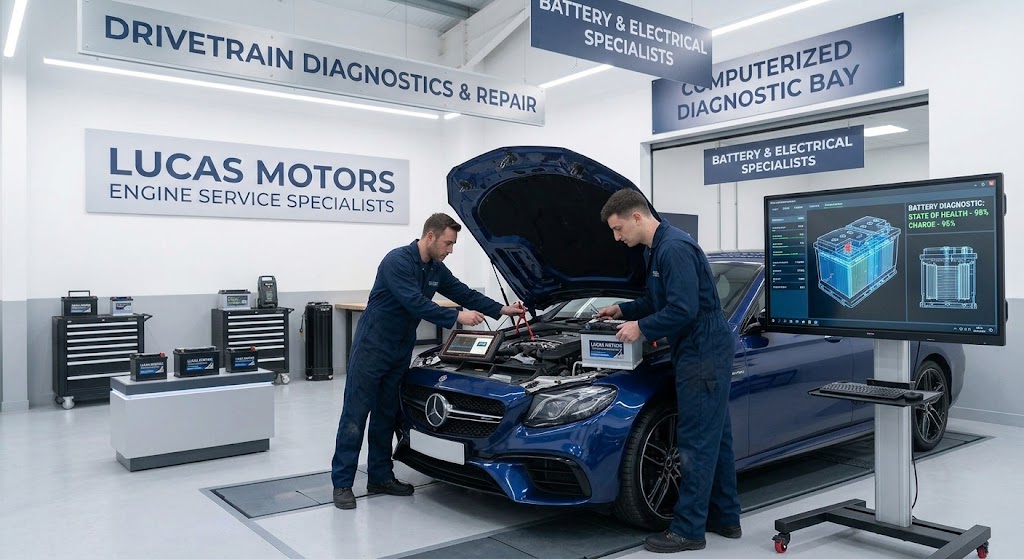
At a glance: Slow starting does not automatically mean a new battery is needed. Battery condition, connections and the charging system should be checked together.
A reliable start depends on more than the battery alone. The battery, starter, electrical connections and charging system all need to work together. When starting becomes slow or unpredictable, testing helps establish which part of that system needs attention.
Luca Motors in Alphington can assess battery and starting concerns and discuss a suitable replacement when the findings support it. This guide focuses on the conventional low-voltage battery used for starting and vehicle electronics; high-voltage hybrid and electric-vehicle battery systems require different assessment.
What does a car battery do?
In a conventional petrol or diesel vehicle, the battery stores electrical energy and supplies the starter when the engine is started. It also supports low-voltage electrical systems. Once the engine is running, the alternator normally supplies electrical power and recharges the battery.
Modern charging systems may vary their output according to operating conditions. This is one reason a single voltage reading is not always enough to judge the whole system.
Battery specifications also vary. Size, capacity, terminal layout and battery technology must suit the vehicle. A car with stop-start or battery-management functions may need a particular type and a specified replacement procedure.
Signs a battery or starting system needs checking
Slow cranking or repeated clicking
If the engine turns over slowly or you hear clicking without a normal start, the battery may be discharged or deteriorated. Poor connections, a starter problem or another electrical issue can create similar symptoms.
Tell the workshop whether the problem is worse first thing in the morning, after several days parked or after a short stop. That pattern helps guide testing.
Electrical changes
Dim lights, unusual display behaviour or accessories operating inconsistently can have several causes, including low voltage. These symptoms are a reason to investigate rather than proof of a failed battery.
A battery or charging warning
A charging warning while driving can point to a charging-system fault, not simply an old battery. Follow the handbook guidance and seek advice promptly. Continuing to drive may eventually leave the vehicle without sufficient electrical power.
Visible damage
A swollen, leaking or physically damaged battery needs professional attention. Do not attempt to open it or jump-start a visibly damaged battery. Battery handling involves electrical and chemical hazards, so follow the vehicle instructions and seek assistance if unsure.
Why batteries become discharged or deteriorate
Batteries age, but their condition also depends on temperature, charging history and how the vehicle is used. Frequent short trips or extended periods parked can leave a battery insufficiently charged.
Lights or accessories left running can cause a discharge. Repeated discharge may also indicate an electrical drain or a charging fault. Replacing the battery without investigating that cause can lead to the same problem returning.
Loose or corroded connections can affect starting even when the battery itself remains serviceable. A complete assessment therefore considers the connections and charging system as well as the battery.
How a battery assessment works
Testing should use the correct battery type and rating. Depending on the concern, assessment may include:
- Inspecting the battery case, terminals, cables and mounting.
- Checking the state of charge and testing battery performance.
- Assessing starting behaviour and relevant electrical connections.
- Checking charging-system operation under appropriate conditions.
- Investigating an electrical drain if repeated discharge suggests one.
A discharged battery may need to be charged and retested before its condition can be judged properly. The result should distinguish a battery that needs replacement from one that has been discharged by another fault.
When should a car battery be replaced?
There is no single replacement age that suits every vehicle. Age provides context, but starting behaviour, test results, physical condition and the ability to retain charge are more useful evidence.
If replacement is needed, the proposed battery should meet the vehicle’s requirements. Some vehicles require battery registration or adaptation after installation. The procedure depends on the model; it should not be assumed that every car needs the same resets.
Looking after your battery
Turn off unnecessary accessories when the vehicle is parked and follow the handbook guidance for storage or infrequent use. If the vehicle is rarely driven, ask about an appropriate charging approach rather than assuming a brief drive will fully recover a discharged battery.
Have repeated starting problems checked and mention them during routine maintenance. Our engine service guide explains other checks relevant to reliable starting and running.
Car battery FAQs
Does a successful jump-start prove the battery is faulty?
No. It may show that additional electrical support allowed the engine to start, but it does not establish why the battery was discharged or whether another component has a fault.
Can I replace the battery myself?
The procedure varies. Check the handbook, correct specification and any vehicle-specific requirements. Professional installation is useful when battery management, difficult access or an unresolved fault is involved.
Why can a battery fail after hot weather?
Temperature affects battery condition and performance. Heat can contribute to deterioration, while an existing weakness may become noticeable later when starting demand changes.
Can I keep driving with a weak battery?
The next restart may fail. If a charging warning is present, the concern may also affect the car while running. Seek advice based on the actual symptoms.
Arrange a battery check in Alphington
Contact Luca Motors at 164 Grange Rd, Alphington VIC 3078. Call 03 9499 6203 or enquire online, including your vehicle details and when the starting problem occurs.