

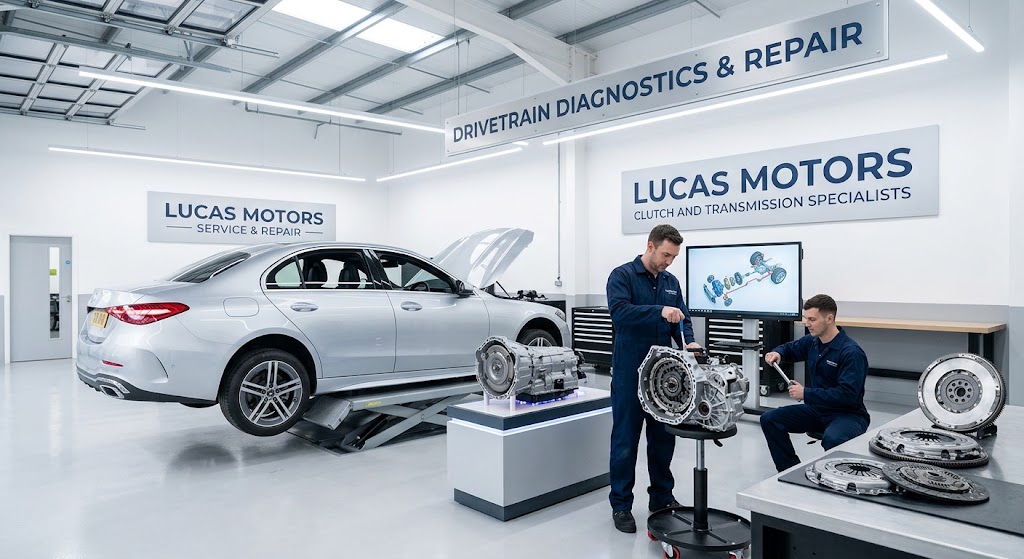
At a glance: Slipping, difficult gear changes and delayed engagement can have several causes. The correct assessment depends on the transmission type and how the symptoms occur.
A clutch or transmission concern can make everyday driving unpredictable. You may notice the engine revving without matching acceleration, a delay when selecting a gear or a new shudder when moving away.
These symptoms deserve investigation, but they do not automatically mean the whole gearbox needs replacing. Luca Motors in Alphington can discuss the concern, assess the vehicle and explain the next step based on the findings.
What do the clutch and transmission do?
The transmission provides gear ratios that allow engine power to be delivered appropriately for different driving conditions. In a conventional manual vehicle, the clutch allows the engine and gearbox to be connected or disconnected as the driver moves away and changes gear.
Automatic systems manage that process differently. Conventional automatics, dual-clutch transmissions and continuously variable transmissions have different designs, fluids and service requirements. Identifying the system fitted is essential before planning maintenance or repairs.
Signs a manual clutch needs attention
Slipping under load
If engine speed rises without the expected increase in road speed, the clutch may be slipping. The pattern, driving conditions and other observations help determine the cause. Continuing to force acceleration can worsen the concern.
Difficult or noisy gear selection
Difficulty engaging gears can involve the clutch release system, hydraulics, linkage or internal gearbox components. A stiff gear change alone does not prove that the clutch friction parts are worn out.
A changed pedal feel
A pedal that becomes unusually soft, fails to return normally or changes its engagement point needs assessment. Hydraulic faults and other release-system issues may be involved.
Shuddering or a burning smell
Vibration when moving away can have several causes, including clutch-related components or mounts. A burning smell also requires investigation rather than an assumed diagnosis. Report when it occurs and whether the vehicle is towing, climbing or in stop-start traffic.
Signs of a transmission problem
Delayed engagement, unexpected gear changes, slipping, grinding and a transmission warning message all deserve attention. Fluid leaks or a new vibration can also be relevant.
Do not identify a fluid only by colour. Transmission-fluid appearance varies, and other vehicle fluids can look similar. Tell the workshop where the leak appears and have its source checked.
If the car loses drive, selects gears unpredictably or cannot be controlled safely, stop in a safe place and arrange assistance. Continuing to drive may increase damage or leave the vehicle unable to move.
What happens during an inspection?
The process begins with the vehicle details, service history and symptom description. Mention whether it occurs cold or warm, which gear is involved and whether it began after recent work.
- Road assessment where appropriate: observing engagement, shifts and drivability when safe.
- Visual checks: looking for leaks, damage and relevant mounting, linkage or hydraulic concerns.
- Fluid assessment: using the specified checking procedure where required.
- Electronic diagnostics: reviewing available codes and data on systems that support them.
- Further testing: checking the suspected cause before recommending parts or major work.
A stored transmission code provides information about a detected condition. It does not by itself establish that a solenoid, control unit or gearbox needs replacement.
Manual and automatic repair options
For a manual vehicle, the investigation may point to the clutch assembly, flywheel, release components, hydraulics, linkage or internal gearbox wear. Which parts need attention depends on the actual findings.
Automatic-transmission concerns may involve fluid condition, leaks, controls, valve-body operation or internal components. Some faults can be addressed without replacing the complete transmission; others require more extensive work.
The proposed scope should be explained before repairs proceed. Timing and available options vary by vehicle, diagnosis and parts availability, so there is no useful universal completion time.
Why transmission maintenance matters
Where scheduled, the correct fluid service helps maintain the transmission’s intended operating conditions. Fluid specification, temperature and filling procedure can be critical, and different transmission types should not be treated alike.
Follow the service information for the exact vehicle and its use. A fluid change should not be sold as a guaranteed cure for slipping or poor shifts; an existing fault may need diagnosis first.
Transmission care also fits into the vehicle’s wider maintenance plan. Our guide to routine car maintenance explains other checks worth keeping current.
For a real workshop example, see our Volkswagen Tiguan DSG transmission service, including hydraulic filter replacement. The service requirements depend on the gearbox fitted to the vehicle.
Habits that can reduce unnecessary wear
In a manual car, avoid resting your foot on the clutch pedal and use appropriate techniques for moving away and holding the vehicle on an incline. Follow the handbook for towing, loads and transmission operation.
Arrange advice for leaks and changed gear behaviour. Do not attempt a fluid top-up without confirming the correct product and procedure; some systems require equipment and controlled conditions to check the level accurately.
Clutch and transmission FAQs
How often should transmission fluid be changed?
Use the schedule and procedure for the specific transmission. There is no single interval suitable for every manual or automatic vehicle.
Does a shudder mean the clutch needs replacing?
Not necessarily. The clutch, flywheel, mounts and other drivetrain conditions can produce related symptoms. Inspection is needed to establish the cause.
Can I drive with a slipping clutch?
Seek advice promptly. If drive becomes unreliable or the symptom is severe, arrange assistance rather than continuing to drive.
Arrange an assessment in Alphington
Read about our clutch repairs and replacement service, or contact Luca Motors at 164 Grange Rd, Alphington VIC 3078. Call 03 9499 6203 or enquire online with your vehicle details and symptoms.