

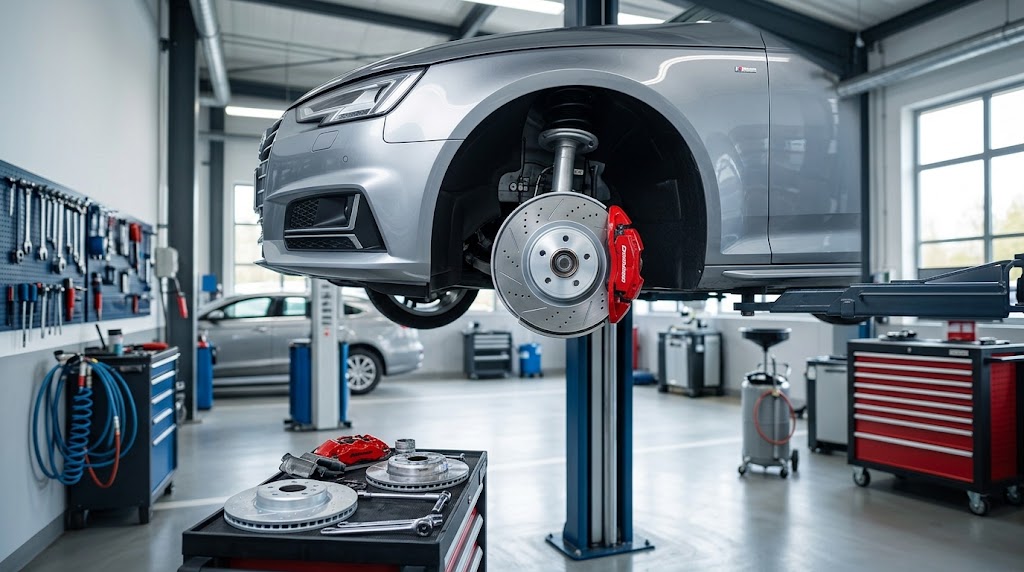
Brake pads and discs wear through normal use, but mileage alone does not tell you when replacement is needed. The vehicle, driving conditions and the condition of the whole braking system all matter.
Luca Motors provides brake inspections, repairs and replacement in Alphington. An inspection helps establish which parts need attention and why, rather than assuming every brake noise requires the same repair.
Replacement should follow assessment: pads, discs and related components need to be checked against the vehicle’s requirements. If braking becomes significantly weaker or the pedal suddenly changes, stop safely and arrange assistance.
What does brake replacement involve?
Brake replacement means renewing components that are worn, damaged or no longer suitable for service. Often this involves pads, discs or both, but the required work depends on what the inspection finds.
The braking system also includes calipers, hydraulic components, hoses, lines and control systems. Replacing pads alone will not correct a fault in another part of the system. For a broader explanation of symptoms and diagnosis, see our brake repairs guide.
Signs the brakes need checking
Squealing or grinding
Squealing can have several causes, including pad condition, friction material and other components. Grinding is more concerning and may indicate severe wear or damage. Have new or persistent noise investigated rather than waiting to see whether it disappears.
A change in pedal feel
A pedal that suddenly feels unusually soft, sinks further or is much harder to press can indicate a braking fault. This is not something to resolve by fitting pads without checking the cause.
Reduced braking, pulling or vibration
If the vehicle takes noticeably longer to stop, pulls during braking or vibrates through the pedal or steering wheel, arrange an assessment. Tyres and suspension can also influence these symptoms, so the inspection may extend beyond the brake components.
A dashboard warning
Brake warnings have different meanings across vehicles. Read the handbook and follow its instructions. If the warning is accompanied by reduced braking or a major change in pedal feel, stop safely and seek assistance before driving further.
When do brake pads need replacing?
Brake pads press against the discs to create friction and slow the vehicle. Their friction material gradually wears away. A technician assesses the remaining material, the wear pattern and any damage against the applicable limits.
Uneven pad wear can indicate another issue, such as a component that is not moving correctly. The cause needs attention as well as the worn pads, otherwise the new parts may wear unevenly too.
Continuing to use pads beyond their service limit can damage other components and impair braking. Inspection provides a better basis for timing replacement than a generic distance interval.
Do discs need replacing with the pads?
Not automatically. Discs need assessment for thickness, wear, surface condition and other defects. The manufacturer’s limits and the condition of the components determine whether continued use is appropriate.
Vibration during braking may lead to further checks, but it should not simply be labelled a disc problem without investigation. Wheel mounting, related components and other causes may need to be considered.
Why inspect the rest of the system?
Checks can include calipers, hoses and lines, fluid condition and visible signs of leakage. Brake fluid has a separate maintenance requirement and must meet the correct specification for the vehicle.
Some vehicles also require particular procedures for electronic parking brakes or control systems. Professional replacement includes following the relevant fitting procedure and checking the completed work, including a road test where safe and appropriate.
Common questions about brake replacement
Can you replace just one brake pad?
Pads are normally replaced as a matched set across an axle in line with the manufacturer’s requirements. Replacing an isolated pad without checking the rest of the axle can create uneven braking and miss the cause of abnormal wear.
How long will the work take?
It depends on the vehicle, parts availability and what the inspection reveals. A straightforward pad replacement differs from work involving damaged discs, seized components or an additional fault. Ask for an estimate once the required work is clear.
How much will replacement cost?
The cost depends on the parts, vehicle and labour required. A useful quote identifies the components being replaced and any related work, so you can understand the recommendation.
How often should brakes be checked?
Follow the vehicle’s service schedule and have new symptoms checked promptly. Stop-start driving, loads and terrain influence wear, so there is no universal pad or disc replacement interval.
Discuss brake replacement in Alphington
Call Luca Motors on 03 9499 6203 to arrange an assessment at 164 Grange Road, Alphington VIC 3078. Describe any noise, warning or change in braking when booking, and seek advice before driving if braking performance is uncertain.