

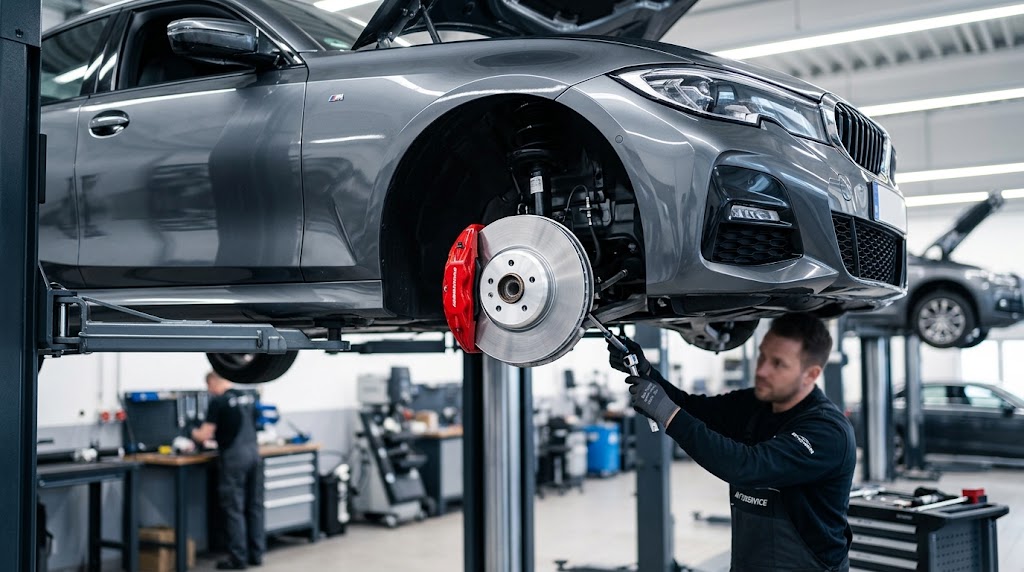
A new squeal, vibration or change in brake-pedal feel deserves attention. Brakes wear through normal use, but different faults can produce similar symptoms. An inspection helps establish whether the issue is routine wear or another problem that needs repair.
Luca Motors provides brake repairs and replacement in Alphington, including brake pad and disc work and brake-fluid servicing. The starting point is understanding how the braking system is operating.
If braking changes suddenly: a sinking pedal, noticeably reduced stopping ability or loss of normal control needs immediate attention. Stop safely and arrange assistance rather than continuing to test the brakes on the road.
What can a brake symptom tell you?
The noise or sensation helps guide the inspection, but it does not always identify the failed part. Tell the workshop when it happens: during gentle braking, after the car has warmed up, at particular speeds or every time you stop.
Useful symptoms to report include:
- Squealing, scraping or grinding when braking.
- Vibration through the pedal, steering wheel or vehicle.
- A pedal that feels softer, harder or different from usual.
- Pulling to one side during braking.
- A change in stopping performance.
- A brake warning, unusual smell or visible fluid leak.
Some noises can arise from surface conditions or friction material, while others indicate wear or damage. Do not assume a new noise is harmless. Grinding, a strong burning smell or a marked change in braking calls for prompt professional advice.
Brake pads: wear and uneven wear
Brake pads create friction against the discs to slow the vehicle. Their friction material is designed to wear, so replacement eventually becomes part of routine maintenance.
How quickly they wear depends on the vehicle, traffic, terrain, loads and driving habits. There is no single replacement interval for every car. The remaining material and condition need to be assessed against the relevant limits.
Uneven wear can be a clue to a related fault. The technician should consider why one pad has worn differently, rather than only replacing the visible worn component.
Brake discs: condition matters
Discs also wear and can develop damage or surface irregularities. Their thickness and condition help determine whether they remain suitable for service or need replacing.
New pads do not always require new discs, but the discs must be checked. Vibration during braking may involve discs or other components, so measurement and inspection are more useful than guessing from the sensation alone.
Why brake fluid needs maintenance
In a hydraulic braking system, brake fluid transmits pressure from the pedal mechanism to the brakes. The system needs the correct fluid and sound hydraulic components to work as intended.
Fluid replacement requirements vary by vehicle. Follow the manufacturer’s schedule and specification, and have unusual fluid-level changes or signs of leakage investigated. Topping up fluid without understanding why the level is low is not a complete repair.
What happens during a brake inspection?
The technician discusses your symptoms and checks relevant parts of the braking system. The scope may include pads, discs, calipers, hoses, lines, fluid and visible leaks, together with related tyre or suspension checks where the symptoms suggest them.
A dashboard warning may require diagnostic testing of the electronic braking systems. A scan is only part of the investigation; the results need to be assessed alongside the physical condition of the brakes.
Our fault-finding guide explains how different checks work together to identify a cause. Once the findings are clear, the workshop can explain the necessary repair and any additional investigation.
Can you drive with noisy brakes?
That depends on the cause, which cannot be confirmed from the sound alone. Contact the workshop for advice and describe any change in stopping ability, pedal feel or warning lights.
If braking is reduced, the pedal changes suddenly, the vehicle pulls severely or grinding is accompanied by poor braking, stop safely and arrange assistance. Follow the owner’s handbook for warning-light instructions rather than assuming every brake warning means the same thing.
Looking after the braking system
Keep scheduled services up to date and report new symptoms between services. Avoid delaying recommended work on components that have reached their service limits.
After brake work, follow any operating or bedding-in guidance supplied for the fitted components. If the car still feels abnormal, let the workshop know rather than assuming the new parts simply need more time.
Brake services for your vehicle
Everyday cars, European vehicles and 4x4s can use different components and repair procedures. Provide the make, model and year when booking so the workshop can discuss the appropriate assessment.
Call Luca Motors on 03 9499 6203 for brake-service enquiries at 164 Grange Road, Alphington VIC 3078. Describe the symptom clearly so we can help determine the next step and whether roadside assistance is needed.