

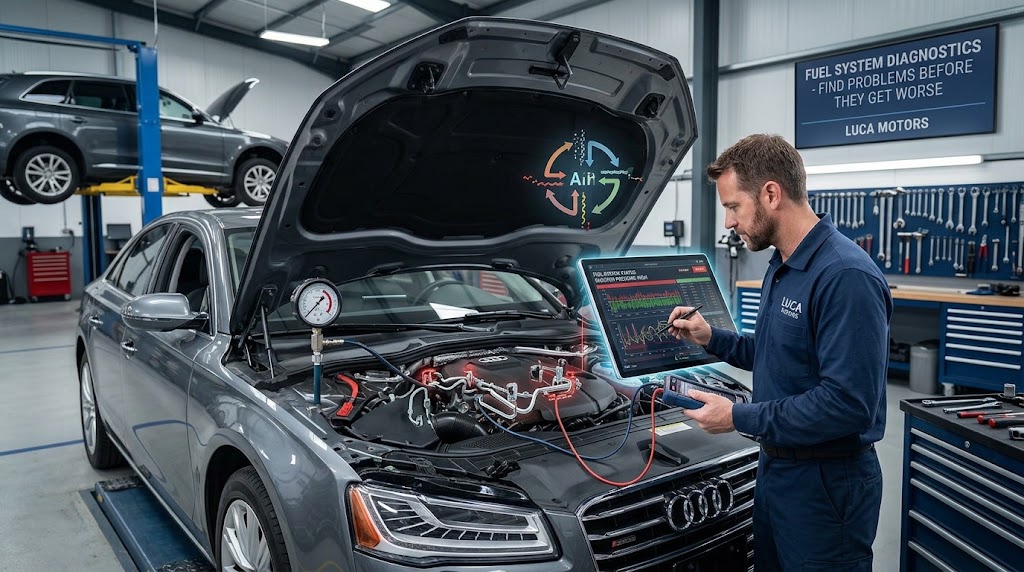
Hard starting, a rough idle or hesitation under acceleration can make everyday driving frustrating. A fuel-delivery problem is one possible explanation, but ignition, air-intake and electrical faults can produce similar symptoms.
Fuel system diagnostics helps narrow down those possibilities before parts are replaced. Luca Motors offers fuel system diagnostics and cleaning in Alphington to investigate how the system is operating and what attention it needs.
Start with the cause: cleaning may help with some deposits, but it cannot repair a failed pump, damaged wiring or every injector fault. Testing should guide the recommendation.
What does the fuel system do?
The fuel system stores and delivers fuel to the engine. Depending on the vehicle, it includes a pump, filters, injectors, pressure-control components, fuel lines and electronic controls.
The engine needs fuel delivered in the right quantity and under the correct conditions for its design. Restricted flow, incorrect pressure, contamination or a control problem can affect starting, combustion and performance.
Petrol and diesel systems differ, and even engines using the same fuel can have different layouts and testing requirements. The correct approach depends on the particular make, model and engine.
Signs that need investigation
Difficult starting or stalling
Extended cranking or repeated starting attempts can be associated with fuel delivery. However, a weak battery, ignition fault or other engine problem may also be responsible. Tell the workshop whether it happens after the vehicle has been parked overnight, when warm or at other specific times.
Rough idling and hesitation
An engine that shakes at idle, hesitates or surges can have an uneven fuel supply. Similar symptoms can arise from air leaks, ignition problems and sensor readings. A systematic check is more useful than choosing a part based on the symptom alone.
Increased fuel consumption
A sustained change in fuel use deserves attention, especially when it accompanies poor running. Driving conditions, tyre pressures, load and other maintenance issues also influence fuel economy, so the fuel system should be considered within the wider picture.
A dashboard warning
The check-engine light can be associated with fuel delivery or engine-management faults. It does not prove that the fuel system is the cause. Diagnostic codes and operating data can help determine where further testing is needed.
What can cause a fuel-system problem?
Possible causes include contamination, a restricted filter, pump wear, injector faults or problems with wiring and electrical supply. Pressure-control components and relevant sensors may also need checking.
Maintenance history is useful. Bring any information about recent servicing, previous repairs and when the symptoms started. If the problem began soon after refuelling, mention that timing without assuming the fuel is necessarily responsible.
What happens during fuel system diagnostics?
The process starts with your description of the fault and an initial inspection. A technician may use diagnostic equipment to review fault records and relevant engine data, then select further tests based on the evidence.
Depending on the vehicle, those tests can include fuel-pressure checks, checks of the electrical supply and assessment of injector operation. Physical inspection may reveal leaks or damaged components that a scan cannot explain by itself.
Fuel systems can operate under pressure, so opening lines or dismantling components is work for appropriately equipped technicians. There is no need to attempt these checks yourself before bringing the car in.
When can fuel-system cleaning help?
Cleaning may be appropriate when deposits are contributing to a problem and the method is suitable for that system. The choice should be based on the vehicle and findings, rather than offered as a universal solution to poor performance.
A mechanically failed component or an electrical fault requires a different response. Likewise, adding a cleaning product cannot establish the cause of a warning light. Ask what evidence supports the proposed cleaning or repair and how its result will be checked.
When should you stop driving?
Do not continue driving if you suspect a fuel leak or notice a strong fuel smell. Stop somewhere safe, turn off the engine and arrange professional advice or roadside assistance. Avoid flames, smoking and other ignition sources.
Repeated stalling or a significant loss of power can also make driving unsafe. Follow the vehicle handbook for warnings and seek advice before attempting another journey. An urgent symptom should not wait for the next scheduled service.
Looking after the fuel system
Use the fuel specified by the manufacturer and follow the vehicle’s maintenance schedule, including filter replacement where required. Keep service records and report changes in starting, idling or acceleration promptly.
There is no single fuel-system cleaning interval that suits every car. Routine maintenance and symptom-led diagnosis should reflect the manufacturer’s requirements and the vehicle’s condition.
Arrange a diagnostic assessment
Call Luca Motors on 03 9499 6203 to discuss fuel-system symptoms. Our workshop is at 164 Grange Road, Alphington VIC 3078.
Provide the vehicle details and the conditions in which the issue appears. We can then discuss the appropriate assessment and whether cleaning, repair or further testing is indicated.