

A sudden exhaust rumble, a rattle underneath the car or an unfamiliar smell can signal that something needs attention. The cause might be a loose mounting, a leak or a fault involving the engine and emissions system.
Luca Motors provides exhaust system inspections and repairs in Alphington. Checking the whole concern helps establish which component needs work and whether a related problem is contributing.
If fumes enter the cabin: stop safely, switch off the engine and move to fresh air. Arrange assistance before using the vehicle again. Exhaust gases can be harmful, and an open window is not a repair.
What does the exhaust system do?
The exhaust system carries combustion gases away from the engine and passenger area. It also helps control noise and, through the relevant emissions components, reduce certain pollutants.
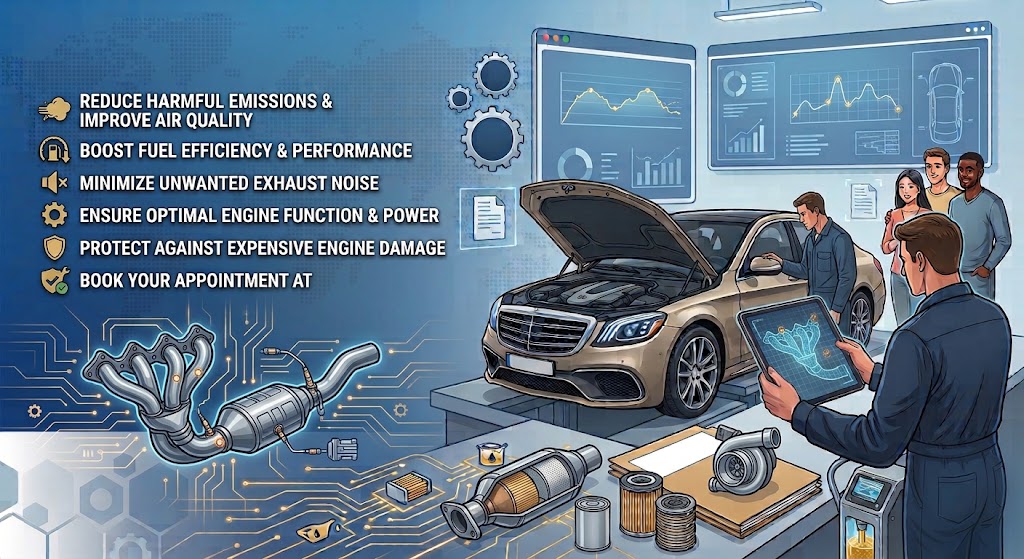
Depending on the vehicle, the system includes a manifold, pipes, flexible joints, catalytic converter, muffler, sensors and mounting hardware. Diesel and other vehicles may have additional emissions-control equipment. Each system needs to be assessed according to its design.
Signs your exhaust needs checking
A new or louder exhaust noise
A rumble, hiss or ticking noise may indicate a leak, while a rattle can come from a loose heat shield, mounting or internal component. The sound and the conditions in which it occurs help guide the inspection.
Tell the workshop whether it is most noticeable during a cold start, acceleration or driving over bumps. A noise alone does not establish which part should be replaced.
A change in engine performance
Restriction or a related engine-management fault can affect performance. However, hesitation and reduced power can also come from the fuel, ignition or air-intake systems. The technician may need diagnostic testing as well as an exhaust inspection.
Unusual smells
Exhaust smells around or inside the vehicle should be investigated. If fumes enter the cabin, stop using the car until it has been assessed. The absence of a noticeable smell does not prove that exhaust gases are absent.
A dashboard warning or visible damage
An engine warning can relate to emissions components, but the code needs interpretation and further testing. Visible corrosion, a hanging exhaust section or damage after an impact also warrants an inspection.
Do not touch hot exhaust components or crawl beneath a vehicle supported only by a jack to investigate a noise.
Why do exhaust systems develop faults?
Exhaust components repeatedly heat up and cool down. Over time, joints, seals and metal components can deteriorate. Moisture can contribute to corrosion, while impacts and movement can damage pipes or mountings.
A pothole or contact with an obstacle may cause damage even when the vehicle continues to drive normally. Worn hangers can allow excess movement, which may put additional strain on surrounding connections.
What happens during an exhaust inspection?
The technician discusses the symptoms, listens where appropriate and examines accessible components for leaks, corrosion, cracks and loose connections. Checks can include pipes, the muffler, heat shields, mountings and emissions components.
If a warning light or performance issue is present, diagnostic data can help guide further tests. A code associated with an oxygen sensor or catalytic converter does not automatically mean that component is the underlying cause.
Once there is enough evidence, the workshop can explain the repair options. A localised fault may need work on one component, while extensive corrosion or damage may require a broader repair. It is useful to ask what condition the surrounding parts are in.
Can an exhaust fault increase fuel consumption?
Some faults involving exhaust flow, sensors or engine management can affect fuel use. The effect depends on the vehicle and the particular problem; a noisy muffler does not always explain poor fuel economy.
Tyre pressures, driving conditions, load and other engine faults should also be considered. An assessment is more useful than assuming the exhaust is responsible for every increase in fuel consumption.
Why prompt repairs matter
A leak or loose component can deteriorate, and an unsupported section can place stress on other parts. Early inspection helps you understand the condition and plan the necessary work.
It cannot guarantee that a larger repair will be avoided. The priority is to address the actual fault, particularly where fumes, insecure components or significant performance changes are involved.
Exhaust care for different vehicles
European cars, everyday passenger vehicles and 4x4s have different exhaust layouts and service requirements. Provide your make, model and engine details when enquiring, and mention modifications or recent repair work.
Follow the vehicle’s maintenance schedule and report changes in noise or performance. Routine servicing can provide an opportunity to identify visible deterioration, but a new symptom should not be left until the next scheduled visit.
Arrange an exhaust inspection in Alphington
Call Luca Motors on 03 9499 6203 to discuss an exhaust concern at 164 Grange Road, Alphington VIC 3078. If fumes are entering the cabin or a component is hanging loose, ask about arranging assistance before driving to the workshop.